The Type Is a Red Herring
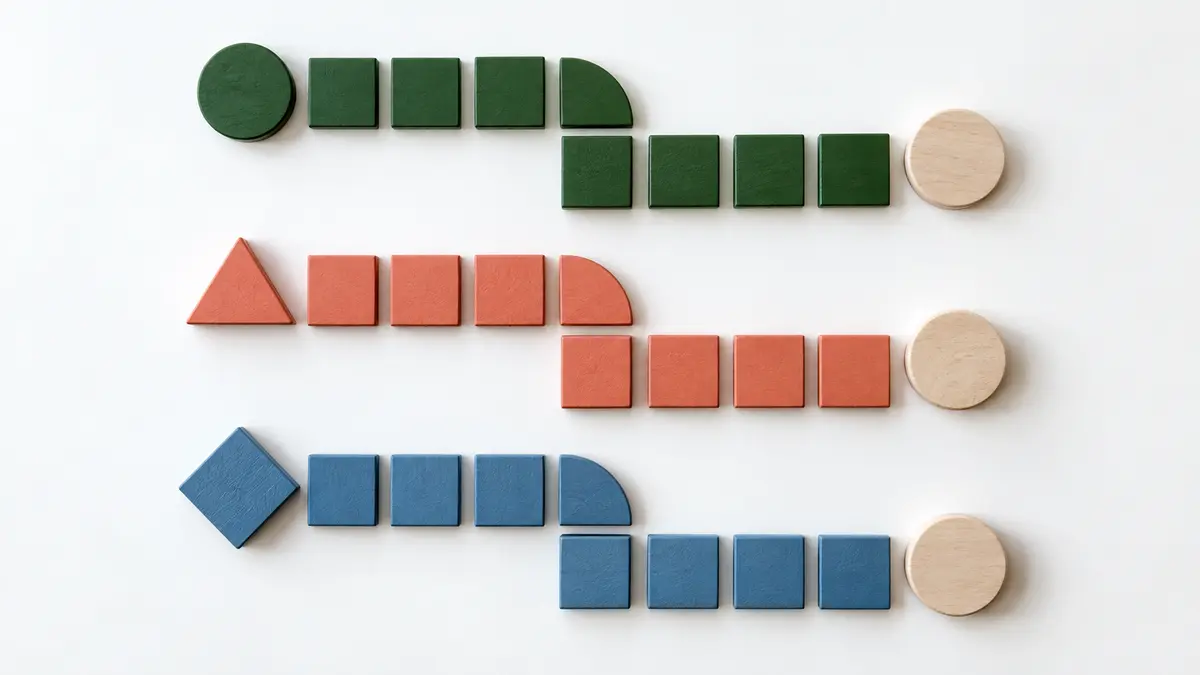
"I just have a type," Dana said, and described three men with nothing in common: a line cook, a PhD student, a guy from her climbing gym. Four years, three endings. The men didn't repeat; her sentences about them did — he was so easy to talk to at first; I stayed six months past the day I knew.
Three men. One story.
The type is a red herring
Ask why it keeps ending the same way and you get a casting note: distant people, unavailable people, people always slammed at work. Tidy — it files four years under bad luck.
The trouble is the unit of measurement. A type is assembled after the fact, out of memory, and memory rarely keeps a log — a mood, three scenes, the last fight. Try reconstructing month four: you get a feeling, not a sequence. So "the same people," up close, are very different people whose stories moved at one speed and left by the same exit.
Your own move, meanwhile, gets filed as a trait — I'm low-drama, I'm the reliable one — and traits take a decade to argue with.
What a pattern actually is
Not a kind of person, not a fate: a repeating sequence of your own moves — a setup, something you do without deciding to, a dependable ending. A complaint describes other people and can't be checked; a pattern describes behaviour, yours included, and leaves room to act differently on Thursday. One story is an anecdote — shape needs three.
Where the first draft comes from
Most of us pick up the grammar at home, years before we have relationships of our own. Not rules — grammar. Who apologises first. Whether people leave loudly or go quiet for three days. Whether "I'm tired" lands as a reason or a provocation. What fills the gap between being hurt and saying so.
None of that is about blaming parents. The family version is just the first text you read closely, and afterwards you either quote it or argue — arguing is still quoting. "Nobody at home said anything, so I say everything immediately" is the same script, sign flipped.
Three timelines, side by side
Three stories stay separate in your head. On one sheet of paper they don't.
You'll need an hour, a page turned sideways, and three relationships that are already over — not the current one, where you're a participant, not a reader. They needn't be romantic: a friendship that went quiet, a cousin you stopped calling. Make the third unremarkable; dinner-party stories are pre-edited.
One rule: write only what a camera could have recorded. "He pulled away" doesn't count. "Texted daily for six weeks, then once a day, then rang at midnight asking to meet tomorrow" counts.
How to run it
1. Draw three columns. Tag each: "M.", "that summer", "climbing gym".
2. Answer six questions in every column — a line or two each, dated to the month:
- How did I know it was starting, and who moved first?
- What did I do in month one that I don't normally do?
- When did it first feel off, and what did I do about it?
- When did I start explaining them on their behalf?
- Who went quiet first, and how did it end?
- What was I telling myself a week later?
3. Add rows of your own. Those six are a frame, not a measuring tape: if your relationships run on a different clock, swap one out. A timeline bent to someone else's grid gives a fake match.
4. Fill all three columns before comparing anything.
5. Read across, not down. Three month-one answers side by side, then three endings.
6. Underline whatever repeats verbatim or nearly. Usually two or three of the six.
7. Write one sentence: "When ___ happens, I ___, and it ends with ___." No adjectives about anyone else's character, at least one verb that belongs to you. Dana's: "When someone drifts, I explain him to myself instead of asking, and it ends with me leaving quietly, half a year late."
Sometimes the columns honestly don't line up. Not a failure — the repeat sits in stories you didn't pick.
What to do with it
Don't rewrite everything. Take the row where the repeat is most literal and invent one different move, evening-sized. If you broke the silence first in every column, let a day pass without texting and note what your hands did instead. Not to win — to see what the move is made of.
Now look hard at the bottom row. We work at making beginnings different — new person, new city, new promises — and end things the way we know how: one vanishes, one waits to be left, one announces it in a car so nobody has to hold eye contact. Add a row: the fortnight after.
Step seven is a working draft, not a verdict on who you are. Reread it in a month; the wording usually needs work, and sometimes it falls apart — also a result. An unnamed pattern looks like fate; a named one looks more like a habit, and habits have seams.
If you take this to a guide, bring the sheets, not the summary. A symbolic language — a chart, a spread, a reading of numbers — is vocabulary for what you found, not a way to learn what happens next. And if the writing gets heavy, stop on whatever row you're on. Paper waits.
About the author
Prepared by the Venera editorial team. About Venera
Comments
Log in to leave a comment.